
The Library of Alexandria
The ancient world's great house of books. Inside the Ptolemies' grand plan to collect every book in the world, the scholars it gathered, and the slow, debated story of its decline.
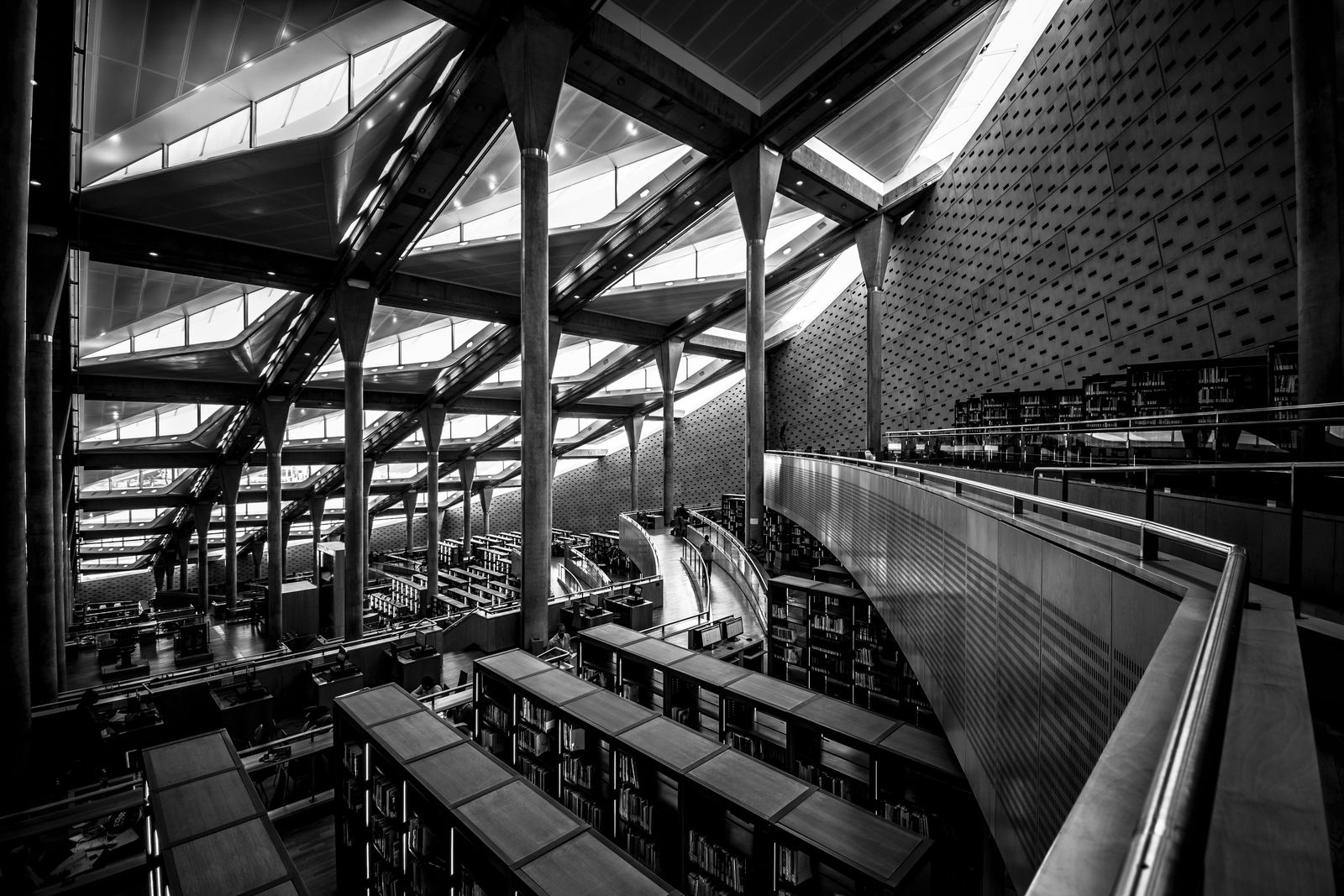
The terraced reading room of the modern Bibliotheca Alexandrina: Mono Abo-Abdo (derivative work by Radomianin), CC BY-SA 4.0
A plan to collect everything
Around the start of the third century BCE, Egypt's Greek-speaking rulers, the Ptolemies, set out to make Alexandria the capital of learning. The idea may have come from Demetrius of Phalerum, an Athenian scholar living at the court of Ptolemy I, but the Library itself was most likely built under his son, Ptolemy II.
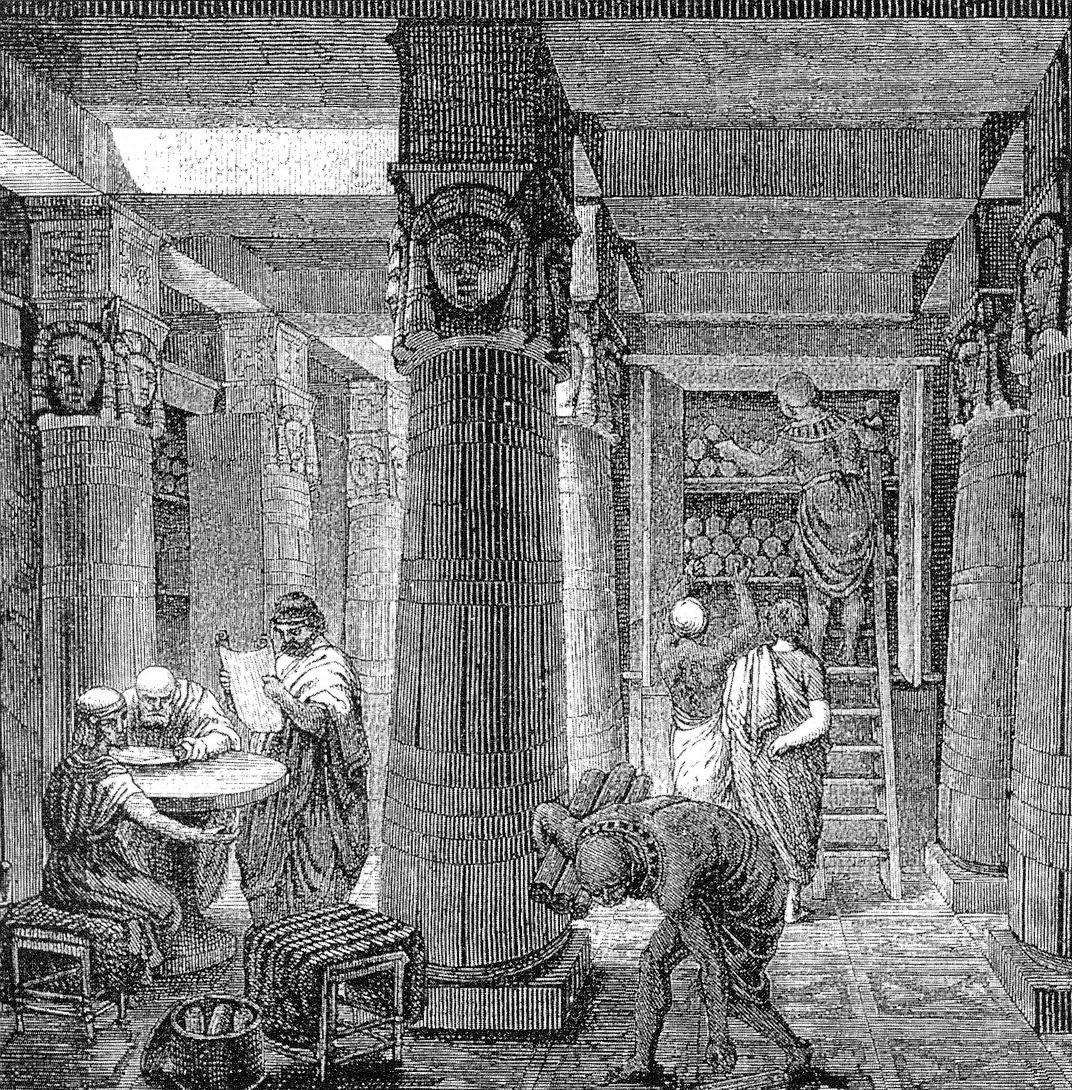
It was part of a larger institution called the Mouseion, a shrine to the Muses that worked like a research center. Scholars received salaries, free meals and lodging, and shared a great dining hall where ideas flew across the tables.
Hungry for books
The kings sent agents with deep purses to the book fairs of Rhodes and Athens. According to the physician Galen, books found on ships arriving in Alexandria's harbor were taken to be copied by official scribes. The Library kept the originals and handed the copies back to their owners.
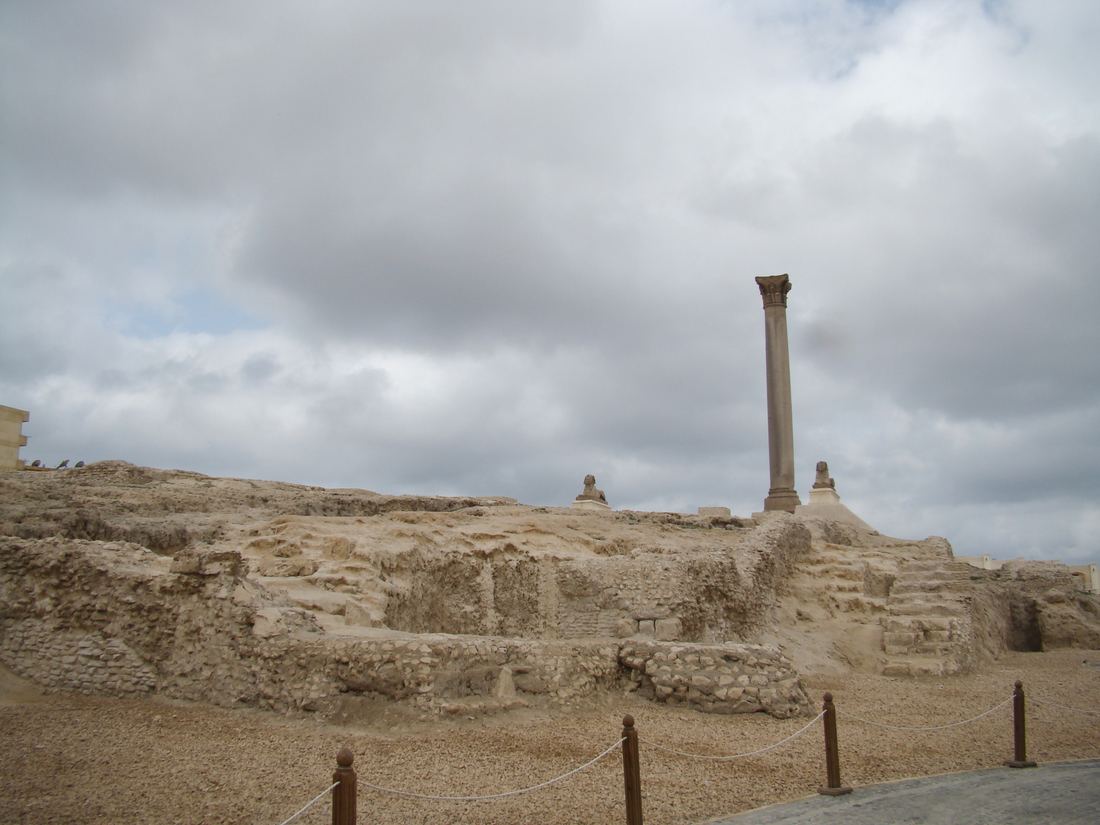
Nobody knows how many scrolls it held. Modern estimates range widely, from about 40,000 to 700,000. To keep track of it all, the poet and scholar Callimachus compiled the Pinakes, a list of authors and their works filling 120 volumes, often called the first library catalog. Under Ptolemy III a daughter library opened in the Serapeum, a temple elsewhere in the city.
The minds it gathered
For about two centuries the Library drew remarkable thinkers. Zenodotus and later Aristarchus of Samothrace worked to establish reliable texts of Homer. Aristophanes of Byzantium is credited with the accent marks used in written Greek. Eratosthenes, one of its head librarians, estimated the size of the Earth. Later, Hero of Alexandria described a spinning steam device, the aeolipile.
A slow fade, not a single fire
Popular stories often blame one dramatic fire for the Library's loss, but historians see a much slower decline. In the second century BCE royal favor shifted and leading scholars left for other cities. Under Roman rule, funding and support dwindled, other libraries rose in prominence, and Alexandria itself lost some of its importance. By the 260s CE the community of scholars appears to have dissolved.
The single-fire legend is an oversimplification. The real lesson is quieter: knowledge survives when people keep paying for it, copying it and caring for it.
In 2002 Egypt opened the Bibliotheca Alexandrina on the city's seafront, close to where the ancient Library once stood, a striking modern library built with UNESCO's support to honor its famous ancestor.
- The terraced reading room of the modern Bibliotheca Alexandrina: Mono Abo-Abdo (derivative work by Radomianin), CC BY-SA 4.0
- A 19th-century artist's impression of the ancient Library by O. Von Corven: O. Von Corven, Public domain
- The site of the Serapeum in Alexandria, home of the Library's daughter collection: Institute for the Study of the Ancient World, CC BY 2.0
Text written by Ancient Visionary.



.jpg)