Göbekli Tepe: Stone Circles Before Farming
Carved megaliths raised about 11,500 years ago. Around 9500 BCE, people in southeastern Turkey raised huge carved T-shaped pillars in round enclosures, thousands of years before the first cities.
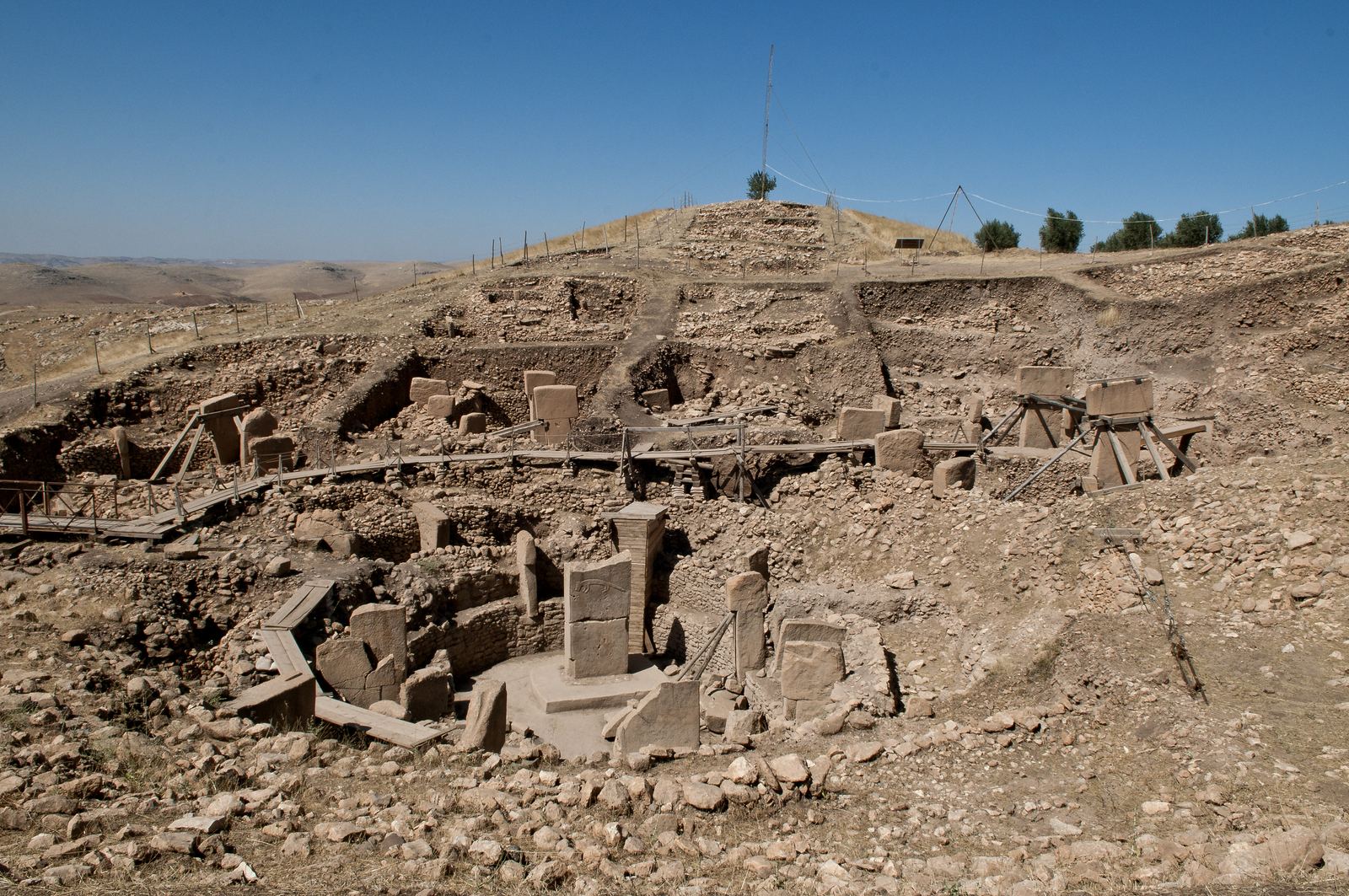
The excavated enclosures of Göbekli Tepe, near Şanlıurfa: Teomancimit, CC BY-SA 3.0
A hill that hid a surprise
On a limestone ridge in southeastern Turkey, overlooking the Harran plain, rises a rounded mound about 15 meters high. Surveyors noted it in 1963, but it was not until 1994 that the archaeologist Klaus Schmidt recognized what lay beneath. Excavations began in 1995 with the German Archaeological Institute and changed how we think about the end of the Stone Age.
Under the soil were large round and oval enclosures ringed by stone walls and benches, with massive T-shaped limestone pillars standing inside. The oldest phases date to around 9500 BCE, before pottery, metal or writing, and before farming had taken hold in the region. These are among the oldest known megaliths on Earth.
Video: Stone Age Temple Mystery | Full Documentary | NOVA | PBS (NOVA PBS Official), embedded from YouTube.
Engineering without metal tools
The tallest pillars reach about 5.5 meters and weigh around 10 tonnes. They were quarried from the surrounding limestone, shaped with stone tools, moved into place and set upright, all without wheels, draft animals or metal. Pulling that off took planning, skill and the combined effort of many people.
Four big enclosures have been excavated so far, and geophysical surveys suggest at least 16 more lie hidden in the mound. Over time the builders also made smaller structures, and parts of the site were gradually filled in.
Foxes, vultures and carved hands
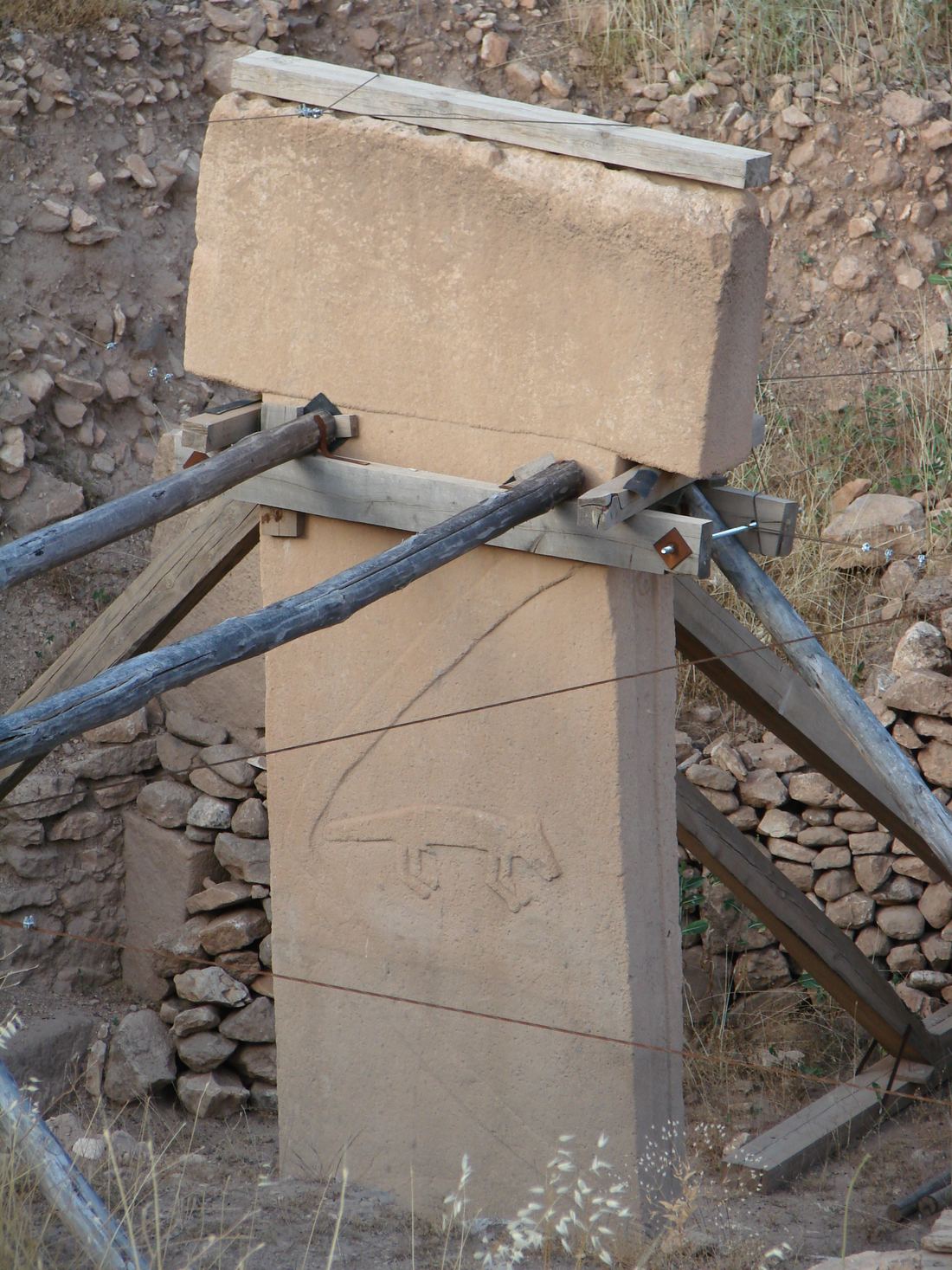
Many pillars are covered in relief carvings: foxes, boars, snakes, cranes, scorpions and vultures, along with abstract symbols. Some pillars have arms and hands carved down their sides and belts with loincloths, which suggests that the T shape represents a stylized human figure, with the top as the head.
Nobody can read the exact meaning of these images, and archaeologists are careful not to over-interpret them. What is clear is that the builders shared a rich visual language and cared deeply about animals and the world around them.
Gathering place or village?
Schmidt saw Göbekli Tepe as a ritual center where groups of hunter-gatherers came together for ceremonies and feasts, without anyone living there permanently. More recent work has found evidence of domestic buildings, food processing and systems for collecting rainwater, suggesting people did live on the hill. Many researchers now think everyday life and ritual activity took place side by side.
Similar sites with T-shaped pillars, such as Karahan Tepe, are now being studied nearby. Together they show that hunter-gatherer communities could organize impressive building projects long before the first cities appeared.
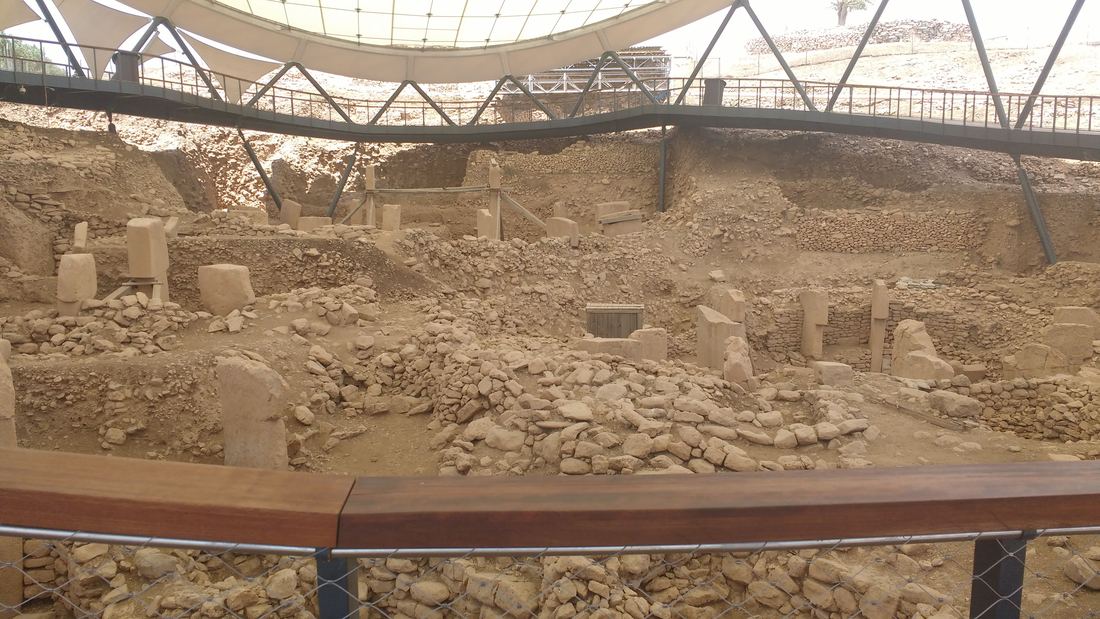
- The excavated enclosures of Göbekli Tepe, near Şanlıurfa: Teomancimit, CC BY-SA 3.0
- A T-shaped pillar carved with an arm and a fox: Guérin Nicolas, CC BY-SA 3.0
- The site today under its protective roof: Immanuelle, CC BY-SA 4.0
Text written by Ancient Visionary.
← Roman Concrete: The Stone That Heals ItselfInca Roads, Rope Bridges and Knotted Records →