Inca Roads, Rope Bridges and Knotted Records
How the Andes stayed connected without wheels. About 40,000 km of mountain roads, grass rope bridges, relay runners and knotted khipu cords linked the Andes into one vast network of people.
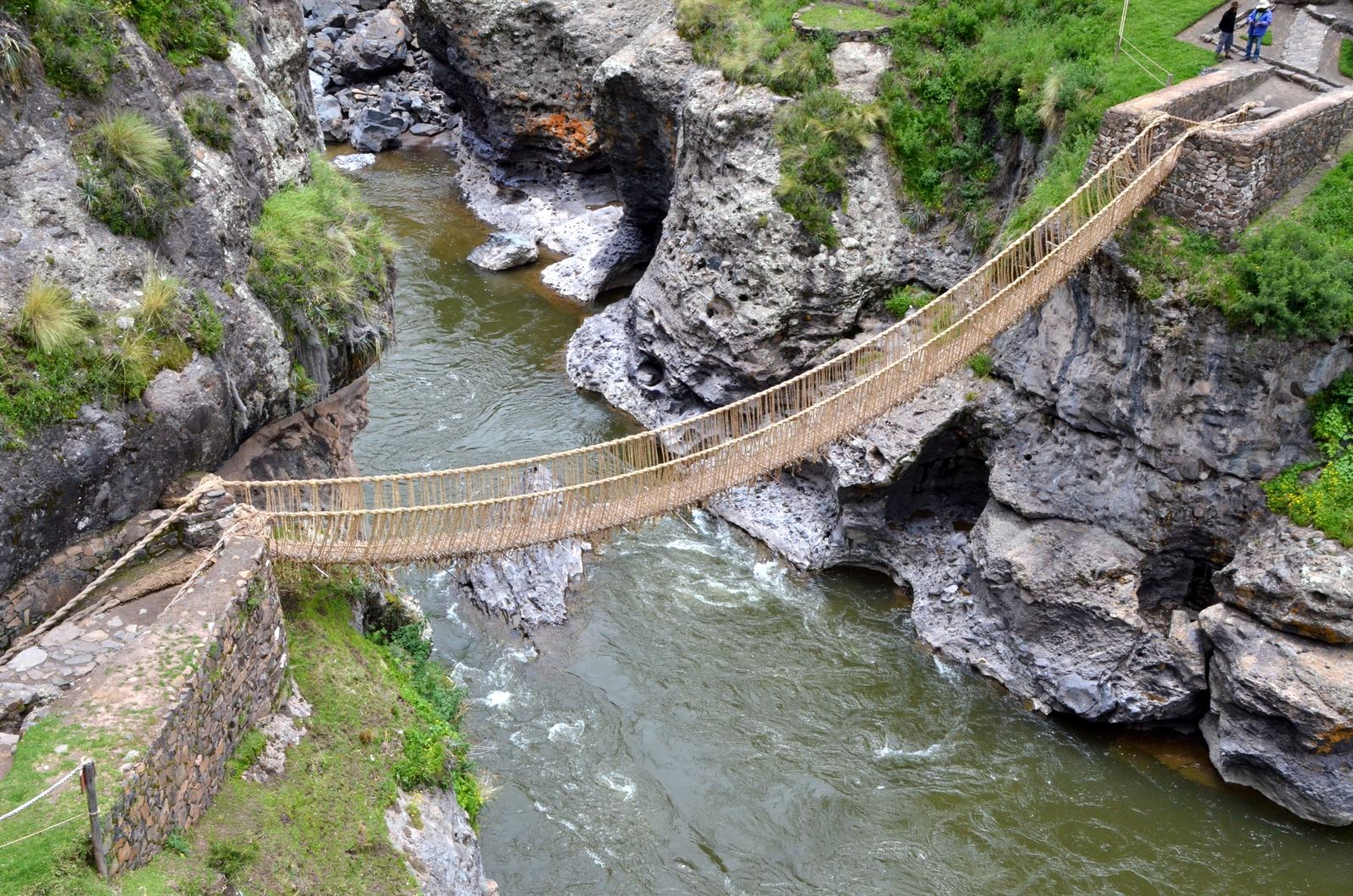
The Q'eswachaka grass rope bridge over the Apurímac River: Aga Khan (IT), CC BY-SA 4.0
A road across the roof of the world
The Inca built one of the great road systems of the ancient world without wheeled vehicles, iron tools or horses. The Qhapaq Ñan, as the network is known in Quechua, ran for roughly 40,000 kilometers through what is now Colombia, Ecuador, Peru, Bolivia, Chile and Argentina. Two main routes ran north to south, one along the coast and one high in the Andes, joined by many cross roads.
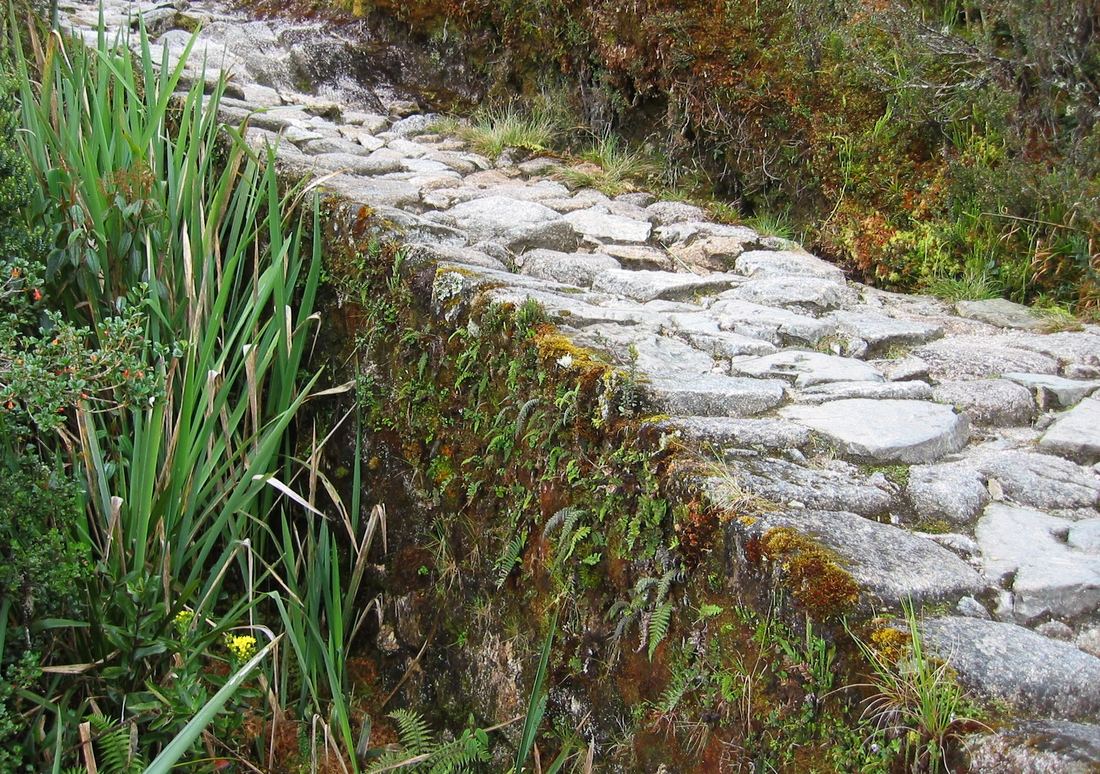
Builders paved steep slopes with stone stairways, raised causeways over wet ground and cut drains to carry away the rain. Some stretches climb above 5,000 meters. Way stations called tambos were spaced about a day's walk apart, offering shelter and storehouses for travelers and llama caravans carrying goods. In 2014 the network became a UNESCO World Heritage Site.
Video: Weaving the Bridge at Q’eswachaka (SmithsonianNMAI), embedded from YouTube.
Messages carried at a sprint
News moved along the roads by relay. Young runners called chasquis waited at small stations a few kilometers apart. A runner sprinted to the next post, sounded a conch shell trumpet, then passed his message or package to a fresh runner, who set off at once. By some accounts, the system could move a message up to about 300 kilometers in a single day.
Chroniclers even reported that chasquis carried fresh fish from the coast up to the highland city of Cusco. Messages were spoken from memory or carried as knotted cords.
Bridges woven from grass
Where a road met a deep gorge, Andean engineers wove suspension bridges from plant fiber. One is still rebuilt the traditional way: Q'eswachaka, about 28 meters long, spanning the Apurímac River in Peru's Cusco region. Every year, in the second week of June, families from four nearby Quechua communities twist grass into thick cables and rebuild it by hand, honoring their ancestors as they work. UNESCO recognized this tradition as Intangible Cultural Heritage in 2013.
Khipu: information tied in knots
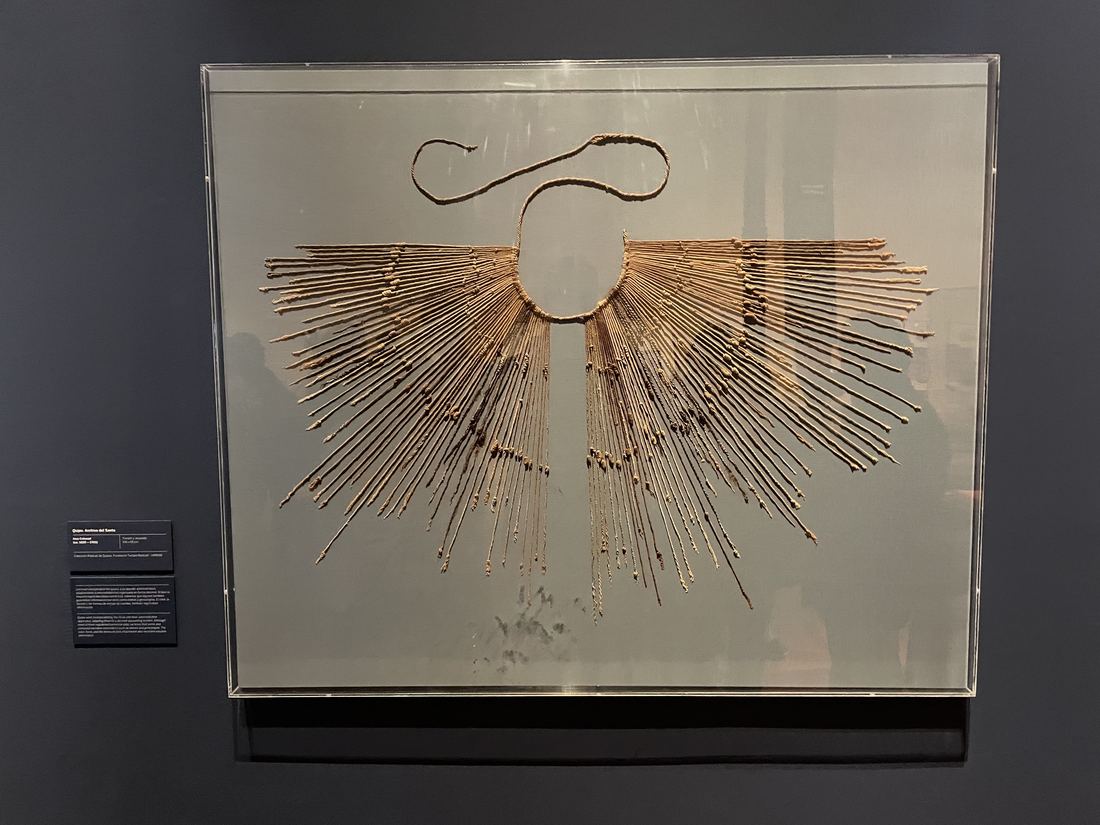
The Inca kept records without writing on paper. Instead, specialists called khipukamayuq tied knots into cords of cotton or camelid fiber hanging from a main cord. Knot type and position stored numbers in a base-10 system, with an empty space for zero, while colors and cord arrangement added meaning. Khipus tracked census counts, labor, harvests and storehouse contents.
About 1,400 khipus survive in museums around the world. The number code was worked out in the early 20th century by Leland Locke, but whether some khipus also record words or stories is still one of the great open puzzles of Andean history.
- The Q'eswachaka grass rope bridge over the Apurímac River: Aga Khan (IT), CC BY-SA 4.0
- A khipu from the Santa Valley, Lima Art Museum: TaphonomyMan, CC BY-SA 4.0
- A stone-paved stretch of Inca road: Bcasterline at English Wikipedia, Public domain
Text written by Ancient Visionary.
← Göbekli Tepe: Stone Circles Before FarmingQanats: Persia's Hidden Rivers →